
You know that moment when someone shows you photos of their kitchen renovation and you actually stop scrolling to look closer? That's usually an Italian kitchen. I've noticed it happens all the time when people start talking about their own kitchen plans. Someone will mention they saw their cousin's Italian kitchen or spent time at an Airbnb in Tuscany and suddenly they're obsessed. They can't stop thinking about it. They start doing research at midnight, bookmarking photos of Italian kitchens, asking contractors questions they don't even know how to ask yet. Here's what I've figured out talking to these people over time. It's not just that Italian kitchens look nice. It's that they actually work differently.
You can feel it when you're in one. The way your body moves through space when you're cooking. The way everything is where you need it to be. But there's this gap between wanting an Italian kitchen and actually understanding what makes one work. That's where most people get confused or end up disappointed. They think it's just about picking certain materials or colors, but it's actually way more about understanding how these Italian kitchens got built in the first place and why a high-end kitchen designed this way works so well.
Why Italian Kitchens Beat Standard Options
I talked to someone last year who'd renovated their kitchen about three years before we met. They spent a decent chunk of money on a high-end kitchen, picked out nice finishes, everything looked great on paper. But when they actually started using it, they were frustrated. The layout made cooking annoying. The appliances they picked didn't work the way they thought they would. The materials started showing wear faster than expected. By the time I ran into them, they were already thinking about doing it again. That's the nightmare scenario nobody wants to deal with. Then there's the other side of this. I know people who renovated their kitchens ten or fifteen years ago with Italian kitchens and they still genuinely love cooking in them. They're not just tolerating the space. They're not constantly wishing they'd done something different. That's the difference between a high-end kitchen that's built with actual understanding versus one that's just pieced together from whatever looked good at the time.
When you really look at what separates kitchens people keep loving from the ones people tear out after a few years, it comes down to one thing. The ones that work were designed by people who actually thought about how you cook in Italian kitchens. Not how kitchens look in magazines. Not what's trendy. But how you actually move through the space when you're making dinner. The ones that fail were built by people just grabbing whatever sounded impressive or looked cool. I had this one friend who got a high-end kitchen done and it cost serious money, but the actual layout was terrible. Cooking felt awkward. They regretted it pretty quickly. Then I know someone else who built their Italian kitchen slowly and carefully, thinking about every choice, and twelve years later people still ask them about it. The budget wasn't hugely different. The difference was approach. One person just wanted a high-end kitchen to look expensive. The other wanted it to actually work.
How Italian Kitchen Design Actually Evolved
The crazy thing about Italian kitchen design is that it didn't get invented by some designer trying to create a trend. It came from how Italian people actually live. I've talked to people who've spent real time in Italy working or living there and they all say the same thing. Italian kitchens aren't fancy showpieces you use sometimes. They're literally where the family hangs out. Dinner isn't something you rush through. It's the main event. People spend hours in Italian kitchens. They're talking, laughing, cooking real food, and eating slowly. That completely changes how you design a high-end kitchen space. When you're building for actual daily use, not for Instagram photos, you can't cut corners. You can't use cheap materials. You can't half-ass the construction.
Walk into a kitchen that was actually built by someone who knows Italian craftsmanship and you notice immediately. Not because it's fancy, but because it feels solid. The wood isn't some thin veneer that's going to peel. It's real walnut or oak or cherry that was picked because it holds up over decades and actually looks better as it ages. The joints are constructed properly because that's the only way this stuff works. The finishes take forever because each one is done by hand. Someone's not rushing. This is why a properly built Italian kitchen designed with actual Italian principles costs what it does. You're not paying for a brand name or because it's trendy. You're paying because someone actually knows how to build a high-end kitchen that lasts and works the way it should. There's a difference between a kitchen that's going to fall apart and Italian kitchens that get better looking for the next fifteen years.
What Makes These Kitchens Look and Feel Different
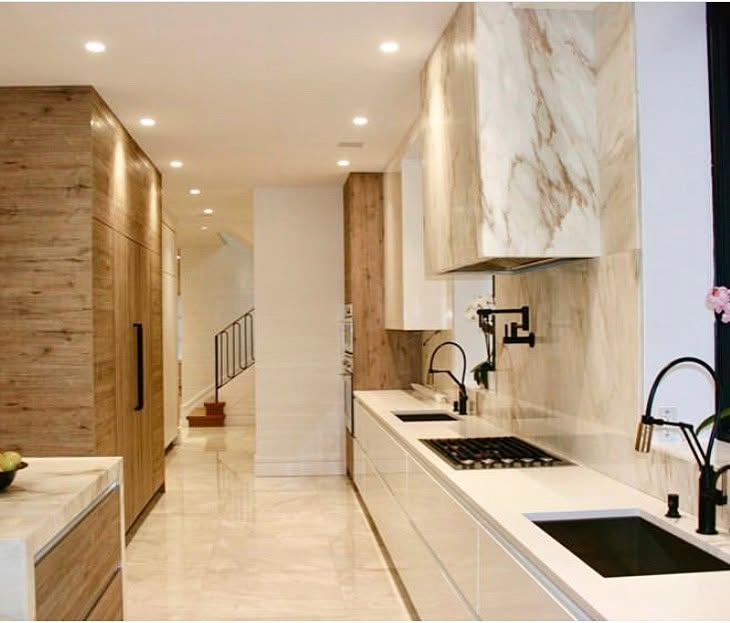
There's something you notice immediately when you walk into an Italian kitchen that you don't notice in most other kitchens. The first thing is usually the color. Most high-end kitchen designs now are either really bright white, which feels kind of harsh, or this cold gray that's everywhere. Italian kitchens are different. They're warm. Cream, soft terracotta, warm gold, muted greens. Colors that actually feel like they belong in a home where people live. I've been in Italian kitchens that are fifteen or twenty years old and the color choices look just as right now as they probably did when they were first done. They don't feel dated. They just feel like home.
The materials in a high-end kitchen are honest about what they are. You can see the grain in the wood because it's real wood. Stone countertops have actual variation and veining. Tile has those little imperfections that come from being handmade. Nothing's trying to hide or pretend to be something it's not. The storage setup in Italian kitchens is smart too. You're not hiding everything behind closed doors like you're ashamed of your kitchen. Open shelving shows off the dishes and glassware you actually like looking at. Cabinets hide the everyday stuff. Drawers actually close properly with soft-close hardware and they're organized inside because Italian kitchens get used constantly by people who don't have time for chaos. A high-end kitchen gets thoughtful lighting. Pendant lights over an island aren't just practical. They're real design features. Task lighting at the counters actually makes cooking easier. Hardware gets picked with real intention because you're touching cabinet handles multiple times every single day. Good brass or bronze pieces that feel solid in your hand and look right with the rest of the space.
How Italian Kitchens Actually Function
This is where the real magic happens and where most people miss the point about Italian kitchens and high-end kitchen design. The layout isn't following some design trend that's popular this year. It's built around how cooking actually works when real people are actually cooking in Italian kitchens. Generous counter space matters because more than one person might be working at the same time. Someone prepping vegetables while someone else handles pasta. An island in a high-end kitchen works as both a prep surface and a casual eating spot. The work triangle between stove, sink, and fridge actually makes sense because it was refined through actual use over decades in Italian kitchens. Everything's positioned so you're not wasting time and energy moving back and forth pointlessly.
Ventilation gets real attention in a properly designed Italian kitchen. A proper range hood isn't some tiny thing tucked apologetically in the corner. It's an actual architectural feature that pulls steam and cooking smells out of the space effectively. Appliances in a high-end kitchen are picked based on what actually works, not what's trendy or impressive. A quality range with reliable heat control beats some specialty burner you'll never use. A versatile oven that handles both fast cooking and slow roasting beats some combination unit that does six things badly. Refrigeration is properly sized because it serves how your family actually eats and cooks in Italian kitchens. Everything gets chosen because it genuinely helps you cook better and easier in a high-end kitchen, not because it looks cool or because the salesperson recommended it.
Conclusion
Here's what I've learned from watching people do this with Italian kitchens. You don't need unlimited money to get the Italian kitchen approach right or build a high-end kitchen. Start with your basic color palette and wood tones inspired by Mediterranean stuff. Real materials matter way more than having everything cost the most money. You can be smart about where you save and where you invest in your Italian kitchen. Lighting and hardware deserve the money because you see them and touch them constantly. Those details communicate quality without having to explain anything. Think about how you actually cook in Italian kitchens. Are you usually cooking alone or with someone else? Do you cook every single day or just on weekends? Italian kitchen design principles work for all of those situations. The philosophy doesn't change whether your high-end kitchen space is tiny or huge. It just adapts to what you actually need.
Here's something people don't realize until later about Italian kitchens. Natural materials get better looking as they age. Wood develops character. Stone gets a patina. A high-end kitchen built this way actually looks more sophisticated and intentional fifteen years later, not outdated, because it's based on real principles about how materials work and how spaces function rather than whatever was trending on design blogs this month. Your investment in an Italian kitchen holds value because good craftsmanship and thoughtful design stay valuable. If you're looking for someone who actually gets this stuff about Italian kitchens and high-end kitchen construction, TimberLux builds everything around sourcing good materials properly, working with real skilled people, and taking Italian kitchen ideas and making them work for actual American life right now. That's the expertise that turns a renovation from just another project into a high-end kitchen space you genuinely enjoy living in and cooking in every single day.
FAQ
Q1. Why does Italian kitchen design cost more than standard options?
Because you're paying for hand-applied finishes, genuine hardwoods, actual skilled craftspeople, and construction methods that take longer because they produce results that last instead of needing to be redone.
Q2. Can I get Italian kitchen style without spending everything?
Yes. Put real materials where people actually see them and spend on lighting and hardware in your Italian kitchen. The approach and philosophy matter way more than every single element being top tier expensive.
Q3. What should I actually ask about when talking to someone about building a high-end kitchen?
Ask about materials, experience, how they think about workflow and movement, whether they understand how cooking actually happens in Italian kitchens, not just how pretty it looks.
Q4. How do I know if someone really understands Italian kitchen principles?
They talk about durability and materials first, then how the high-end kitchen space actually functions, and how aesthetics come naturally from those things working together well.
Q5. Will an Italian kitchen style look dated in ten years?
No. Because it's based on genuine principles about materials and how Italian kitchens work rather than temporary trends, it actually looks better as it gets older.